
Kashmir Saffron Farmer’s Secret: Vermicompost for Stronger Crocus Beds
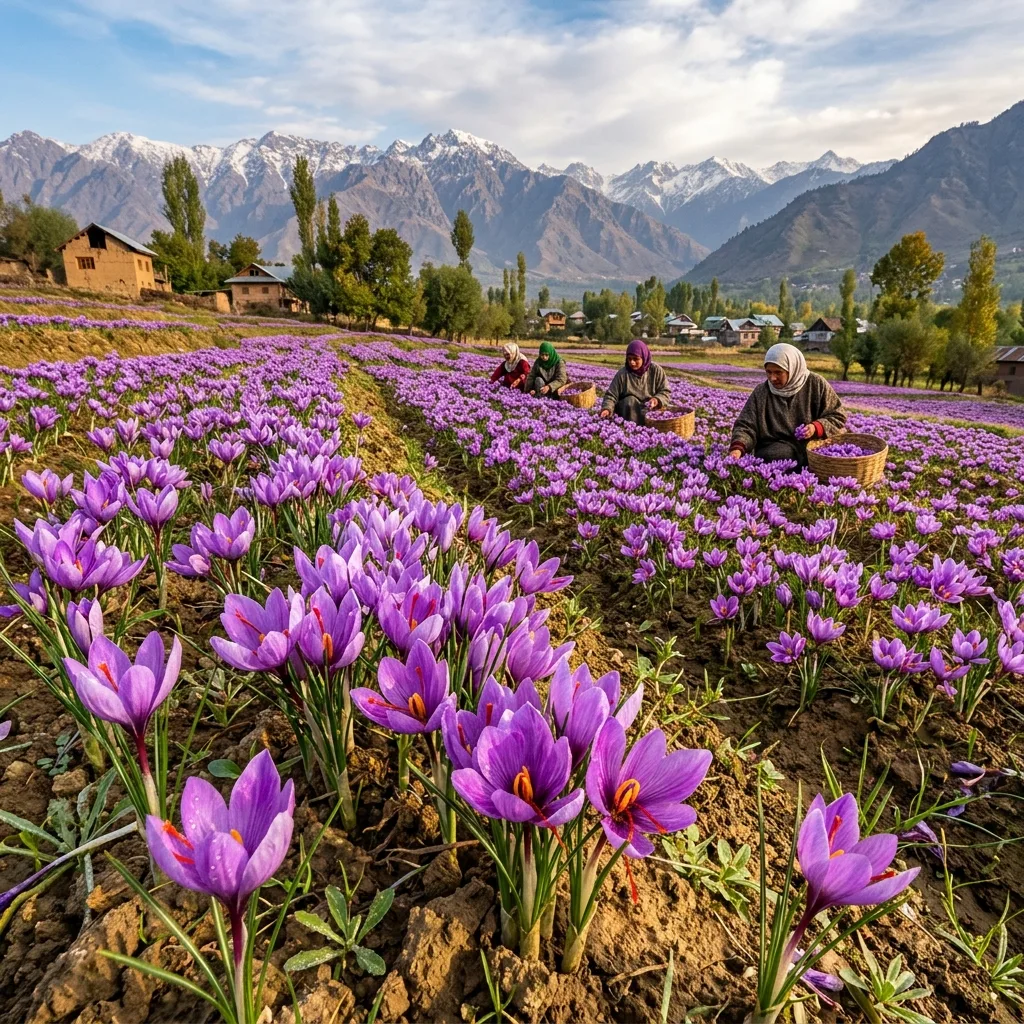
In the saffron fields of Pampore, Pulwama, Mehmood Irfani watched harvests shrink year after year. Chemical top-dressing burned money but not the underlying problem: tired, compact soil that could not hold moisture through Kashmir’s dry winter spells. His turning point came with Satva Organics vermicompost—and a simple before/after trial on half a kanal.
Why Saffron Soil Needs Organic Care
Saffron is among the world’s highest-value crops per hectare—but it demands loose, rich topsoil and careful moisture management. Years of urea-heavy programmes left many Pampore plots hard and biologically quiet. Vermicompost adds humus, improves structure, and releases nutrients slowly—matching the crop’s rhythm better than a single chemical flush.
Mehmood’s Field Trial
In autumn, he incorporated Satva vermicompost into one section of his bed and left a neighbouring strip on his usual chemical plan. Both received similar irrigation. By flowering time, the organic section showed stronger stand and more uniform bloom—neighbours noticed before he measured harvest weight.
"It felt like the soil could breathe again. The corms looked healthier at lifting time," Mehmood says.
Why Satva Works for High-Value JK Crops
Satva’s blend combines earthworm-processed manure with neem and turmeric botanical extracts plus Trichoderma—supporting root-zone defence in cool, damp soils. For saffron, that means better moisture retention and microbial life without the salt shock of raw chemicals. Read our microbial fertilizer explainer for the science.
Step-by-Step Application
- Prepare beds after first light rain; remove weeds and old mulch.
- Mix vermicompost into the top 10–15 cm—do not leave heaps on the surface.
- Plant corms at recommended depth; irrigate lightly to settle soil.
- Avoid same-day fungicide drench; give microbes 7–10 days to establish.
Growing saffron in JK? Contact Satva Organics for bulk vermicompost and field guidance in Pulwama and Pampore.